

Beyond “Sustainable”: Why I’m Becoming a Regenerative Developer — and what that asks of Us All
Sustainability asks us to do less harm. Regeneration asks us to leave a place more alive than we found it. After years in commercial real estate, I’ve come to believe those are not two points on the same line. They are two different states of awareness. Regenerative is to Re◦Membering — the process of bringing all parts of yourself back together — mind, body, emotions and spirit — to feel whole and connected again.
. . . . . . . . . . . . . . . .
For most of my career, “sustainable” was the highest compliment a project could earn. We chased the certifications, modeled the energy loads, specified reclaimed timber, and counted the gallons we didn’t flush into the municipal sewer. It felt like progress, like a “gold star” earned in grade school, and in fairness it was. Sustainability dragged the design and building industry of its worst habits. It gave designers a vocabulary for
restraint, developers more questions of “does this return?” and gave capital a reason to care. Let’s give credit to progress — the people doing serious sustainability work are doing good, and the cynics who mock it signal they’ve built little to nothing.
But somewhere along the way I noticed what the word was quietly becoming: hollow. Sustain means hold steady. Do less damage. Net out closer to zero. The entire moral imagination of sustainability is organized around a single verb: reduce. Reduce the footprint, the waste, the harm. It is the ethics of a guest trying not to leave a mark on someone else’s house. Think about it. The footprint isn’t the kind you might imagine left in the sand at the beach. Here’s the real image. It is either being cut down or “mined” from gaping holes in the ground.
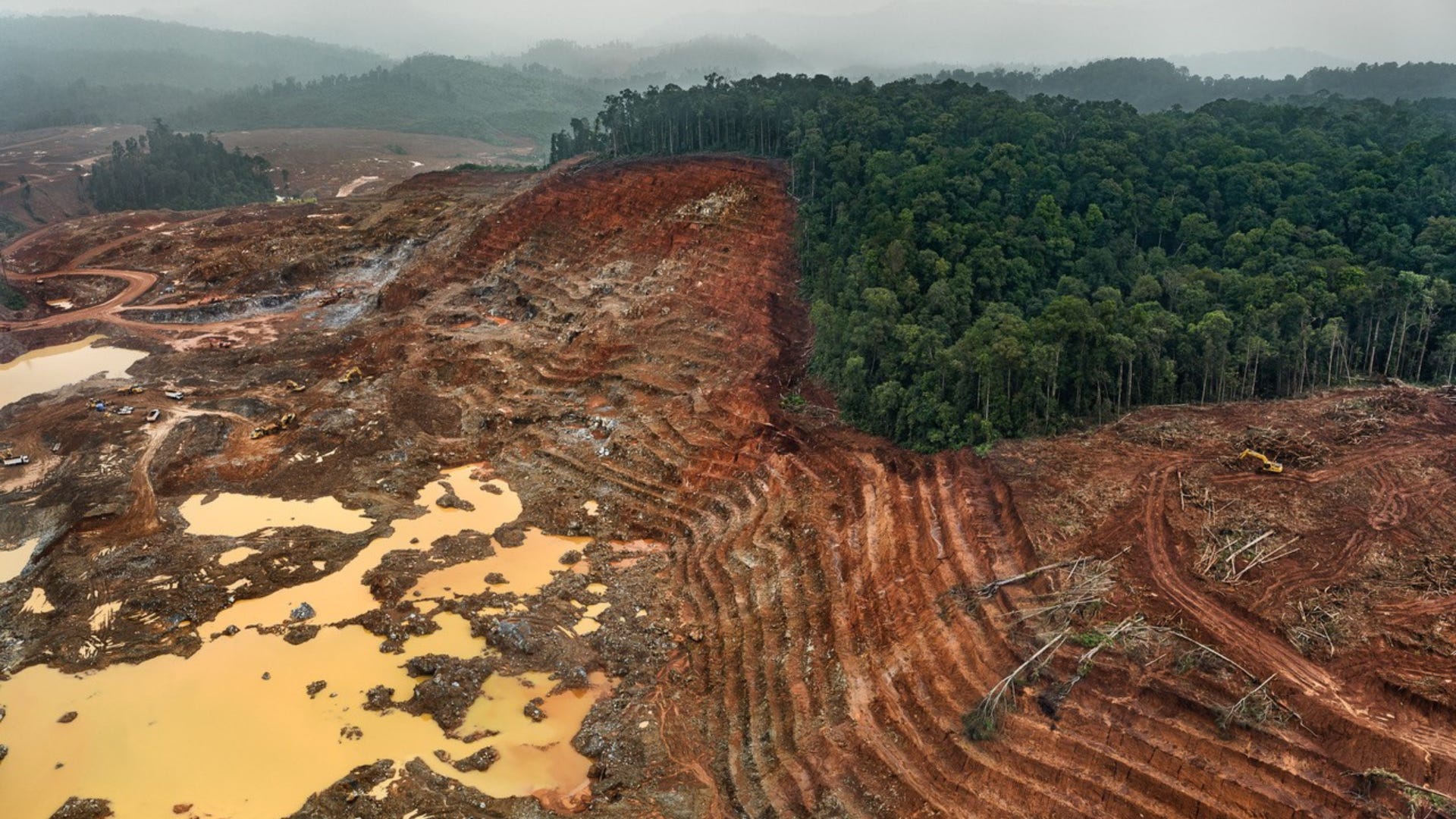
And this is the imagery that woke me up to say, wait. Because the places I am loving the most these days — the working farms (watch the film The Biggest Little Farm), the terraced hillsides, the majesty of coastlines that have been tended for centuries — were not carved by people trying to leave no mark or do “less bad.” They were carefully crafted by those who left a better place than they found — not by those who maximized density to extract profit. The land is richer and produces a livelihood for the community from having regenerated it. A sustainable relationship to a place asks, “How do I take less?” A regenerative one asks something harder and more humbling: “What can I DO that makes this whole system more alive, fruitful, and living after I’m gone?”
That is not a louder version of the same question. It is a different question, and it reorganizes everything downstream of it.
Here is the reframe I’d offer anyone standing where I stood. Sustainability treats a place as a stock of value to be protected from depletion. Regeneration treats a place as a living system to be partnered with — the soil, watershed, community, culture, climate — so that the total bio-system itself grows in health and capacity over time. The first is spun as conservation. The second is regenerative cultivation. And cultivation is the older, deeper craft, the one every regenerative farmer and every conservation re-forester already understands: you don’t always preserve a living system by leaving it alone, and you don’t improve it by extracting
from it. You improve it by participating with it.
What does that actually demand of a developer? More than a checklist, which is exactly why it’s harder to sell. It demands that you start before the “Acquisition,” before “The Pro Forma,” before programming or design — instead of the first question being “what do we build and how can we spray-paint it green?” ask: “What is this place? What is it already trying to become or return to? What are we missing?” It demands that the watershed and the community get a vote in the design, not a “comment box” after the design is done. It demands that you measure success in things that don’t ft squarely into a pro forma: soil health, carbon sequestration, and biodiversity rising rather than holding, local livelihoods deepening rather than merely surviving, a place that is measurably more alive in year ten than it was the day you arrived. Sustainability can be audited. Regeneration has to be lived, and it commits you to the place long after the thin certificates or hollow vanity plaques would lie to us all.
I’ve watched a project designed with a grey-water treatment plant be deleted solely due to budget constraints, post capital-call. The building was double-piped for it, the water treatment system wasn’t and will likely never be installed. The water was cheap. The solar panels survived — primarily because of the tax credits that transfer to the owners. It’s the proverbial budget landslide that shears of good intentions.
To be pragmatic, none of this makes sustainability wrong. It makes it incomplete — a floor we needed, mistaken for a ceiling. Doing less harm is the right place to start and a poor place to stop. The honest tension is that regeneration is slower, harder to standardize, and asks for more patient capital than a quarterly-earnings or four-year-stabilization mindset wants to commit to. Anyone who tells you it’s free or fast is selling the label, not doing the work. I’d rather name the cost plainly than pretend it away.
So I’ve become convinced the cost is the point. The places people travel across the world for, visit as a child and return with their children, and feel energetically reinvigorated by are almost never the ones that merely minimized “less bad.” They are the ones that listened to the land then did “better” for the land and the people living around it — that left the whole system more alive — with a radiating life-force energy. You can feel it. This should be the new standard, and it is the bar, a new standard that I am inspired to build toward.
So, I’m moving beyond “sustainable.” Not because it was false, but because it was the question of a guest, and I no longer want to develop like a guest. I want to develop as a steward who partners with the place and makes it more beautiful — which is the oldest definition of stewardship there is.
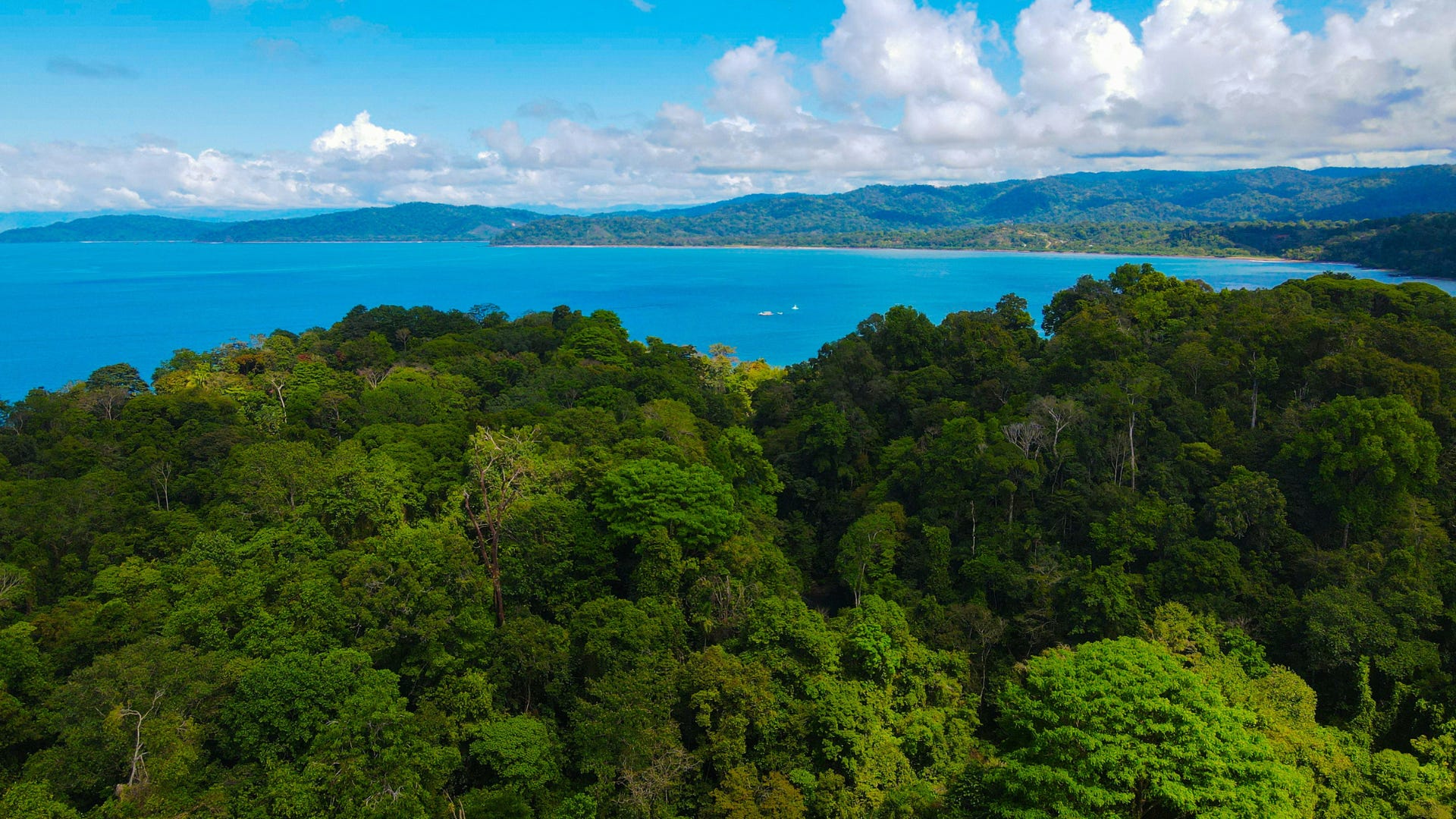
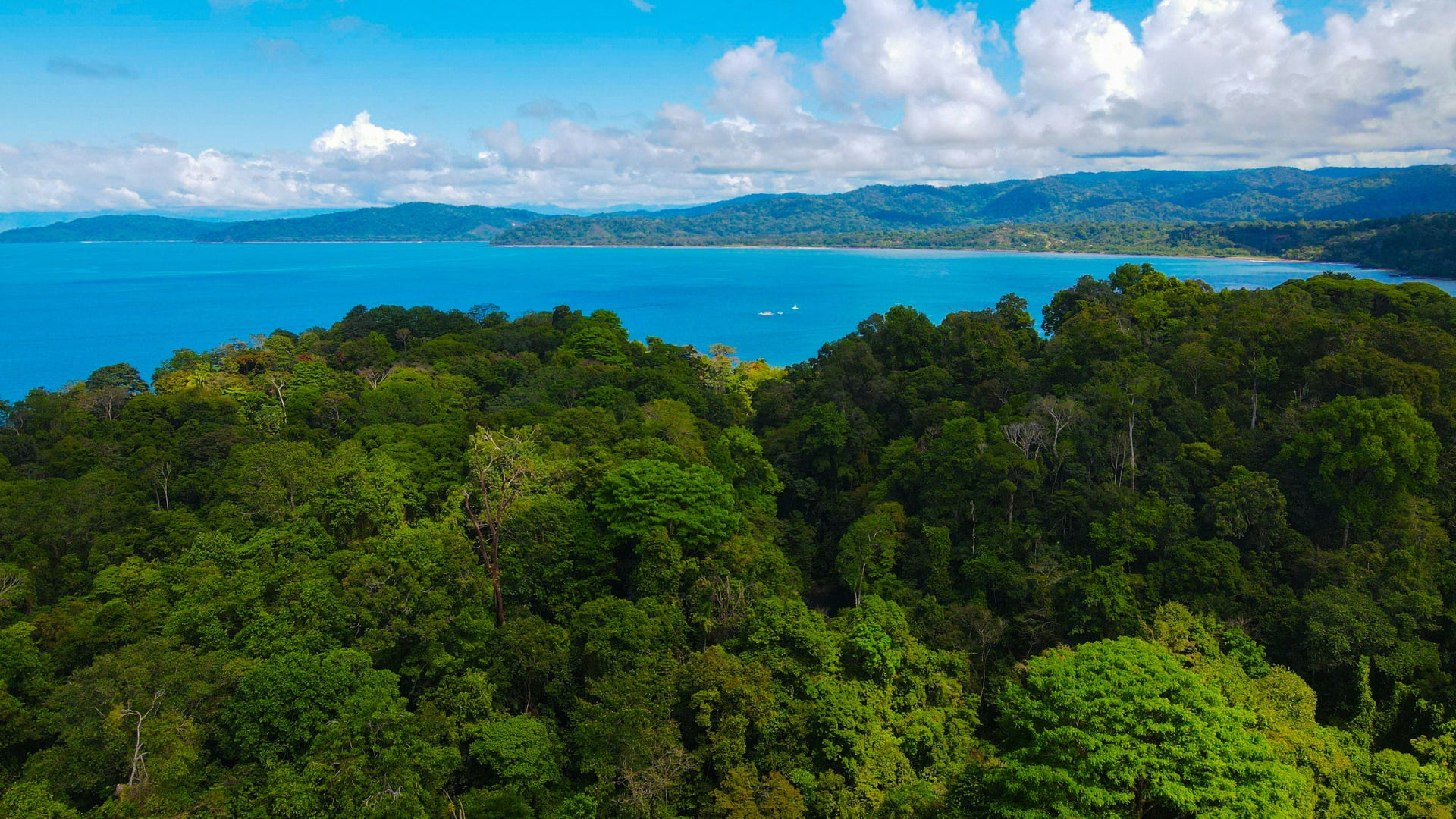
Drake Bay, Costa Rica by Florian Delée.
Costa Rica returned much of its land to forest in a single generation — proof that "more alive than we found it" is not a slogan but a track record. Photo: Florian Delée
. . . . . . . . . . . . . . . .
That’s the thread I’ll be pulling on here, one tug at a time and being my 1st article only scratches the surface of the macrocosm & microcosms of what’s to come: what it actually takes to inspire others to achieve optimal potential; the land, eco-social aspects of community, scientifically grounded knowledge and wisdom of metaphysical aspects of a master builder, and demonstrations of what is possible. If curious, Follow and send some Likes and Love.
To download a PDF of this article click here.
. . . . . . . . . . . . . . . .
Additional perspective:
The first verse of the Sepher Yetzirah:
With 32 mystical paths of Wisdom engraved Yah.
The opening verse is doing something unusual even for mystical literature. Most cosmogonies begin with substance — the void, the waters, the darkness. The Sepher Yetzirah begins with structure — paths, number, inscription. Before anything exists, there is already a geometry of knowing.
32 is itself the glyph: the Hebrew word for heart — לב (lev) — has a gematria of 32. So the 32 paths aren’t just a map of creation outward; they’re a map of the intelligence that beats at the center of it. Wisdom and Heart as synonyms, at the root.
Yah — not Elohim, not YHVH in full — specifically the compressed, breath-form of the Name. The smallest utterance. Which suggests the act of engraving these paths required almost nothing — a whisper of existence was enough force.
Engraved (chakak) is also worth dwelling on. Not spoken, not willed — inscribed into a medium. Reality as substrate that receives impression. The paths aren’t projected outward; they’re cut into something that was already there waiting.
There’s a contemplative question buried in the opening that the text never directly answers:
Who was the 32 paths engraved for?
Not for Yah — Yah enacted them. Possibly for the one who finds them. Which puts the reader inside the cosmology from word one.
The Sepher Yetzirah’s opening is essentially a cosmology of first principles: reality structured through the precision of number, letter, and sound.
The Voice lives here and my Instagram.
The Proof is on LinkedIn, archeadvisers.co, and ARCHĒ’s Instagram.
The Promise.
Beautiful introduction to your work and your calling, Ryan. I’m excited to watch what you create here and out there.