

INTRODUCTION TO A 5-PART SERIES:
I will share how Pricing Nature & Natural Capital has matured beyond pilot investment stage to a status of version 3.0. Demonstrable beyond a moral overlay, significantly lifting to income producing asset values through experiential travel by combining both regenerative farming and well-being hospitality. We’ll start with a quick high-level (what makes dollars and has sense) market perspective and dig into the dirt as a vital foundation.
1+1=4
I aim to inspire investment from combining Nature-Based commercial real estate development + Regenerative Farming to yield living-system returns with significant financial rigor. I note 1+1=4 because many times, there are one, two or more additional untapped revenue streams existing through application of innovative Blue Economy (1) outputs on the very farm or land that traditional business thinking throws out. Think of this natural bounty (“Pulp-to-Protein” (2) by nature considered a waste-stream innovatively turned into food for farm animals or used as a natural fertilizer. This can 2-3x associated incomes. We’ll expound on this in another article of this series.
Spoiler alert, the “do-better” Biodiversity & Carbon credits are only accounted and measured as income alongside the foundations of farming and wellness hospitality, yet can help to attract investment or de-risk for future Environmental Social Governance (ESG) requirements and secure outputs of future generations through soil health, food supply, and your local neighborhoods. Previous LinkedIn or Substack articles I’ve written expound on Sustainable vs. Regenerative, if you need to get up-to-speed on “regenerative.”
The wellness demand is large and growing per the Global Wellness Institute (GWI (3): Wellness real estate currently ~$548B is growng to $1.1T (2029, a CAGR of 15%). Wellness hospitality assets command 10–25%+ price premiums. How? 65% more revenues from wellness hospitality assets vs. standard hospitality. Wellness Tourism is currently $893.9B as of 2024 and is growing at a 9.1% CAGR.
Additional factors to be considered are the Single-Family Residential price premiums that are possible from property in such communities and the 4.4–7.7% commercial rental premiums. Branded residences tied to wellness amenities on-site are typically placed in revenue sharing pools or fractional ownership structures.
It’s great if you are envisioning a large destination-scale rural regenerative farming wellness hospitality. However, urban projects are proving attractive to buyers as well.
Per Urban Land Institute — Agrihoods: ~150–200 agri-hoods across 30+ states; price premiums are up to 30% and provide for faster entitlements. ULI Agrihoods report (PDF). (4)
If you are driven by data we have those assurances too. Per WellSurvey 2.0 (5) by Kevin Kelly & Peter Yesawich (April 2026). Demand has moved from “wellness” to “wellbeing” to “longevity.”
Wellness = the inputs (exercise, spa, nutrition); wellbeing = the integrated outcome (physical + emotional + social + purpose + environmental context); = its durability. 50% are now more interested in wellbeing than wellness; 80% link wellbeing to longevity. A nature-based regenerative farm-resort delivers the whole wellbeing system, not another wellness stack.
Science is the price of admission. The only claims consumers trust are “clinically proven” (71%), “recommended by a scientist” (67%), “evidence-based” (66%). “Holistic” (38%) and “ancient Eastern practice” (27%).
Emotional state is the real KPI. 74% judge their health by “how hopeful, joyful, and energized they feel.” Place, nature, and food move that needle in ways a treadmill and a supplement can’t — the differentiation.
WELLZoomers (25–44) are the demand engine. A globally convergent cohort — ~$298B core spend today, growing to $425–610B within five years (~7.5% CAGR); 86% plan a wellness visit in 12 months; stress accelerates their engagement. WELLZoomers are “system-builders” who want continuity.
This category, we are developing, has no brand leader — the whitespace is enormous. Shown 36 wellness resort brands, 53% chose “none of the above”; the leaders (Six Senses, Canyon Ranch) drew only 10% each. Programming has commoditized (80% think brands offer the same thing), so price and convenience currently drive decisions.
Nature settings win on venue preference: Coastal 77%, mountain 64%, secluded retreats 59% — supports a nature-destination model.
My own deduction. Combining the empirical wellness and wellbeing data with, to me obvious: demonstrating an authentic, nature-led regenerative experience is what the consumer-traveler is seeking beyond the watered-down, what has become an outdated and duplicative to the competitions offerings.
These aren’t hypotheticals. In these articles I’ll touch on several operating exemplars including — Apricot Lane Farms (6) (California) and Babylonstoren (7) (South Africa), Il Borro (8) (Tuscany), and prove the model across markets. If you do one thing first, watch The Biggest Little Farm (9). Then meet me back at the soil.
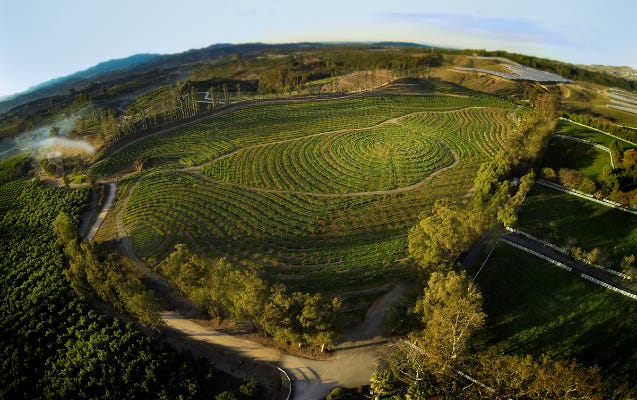
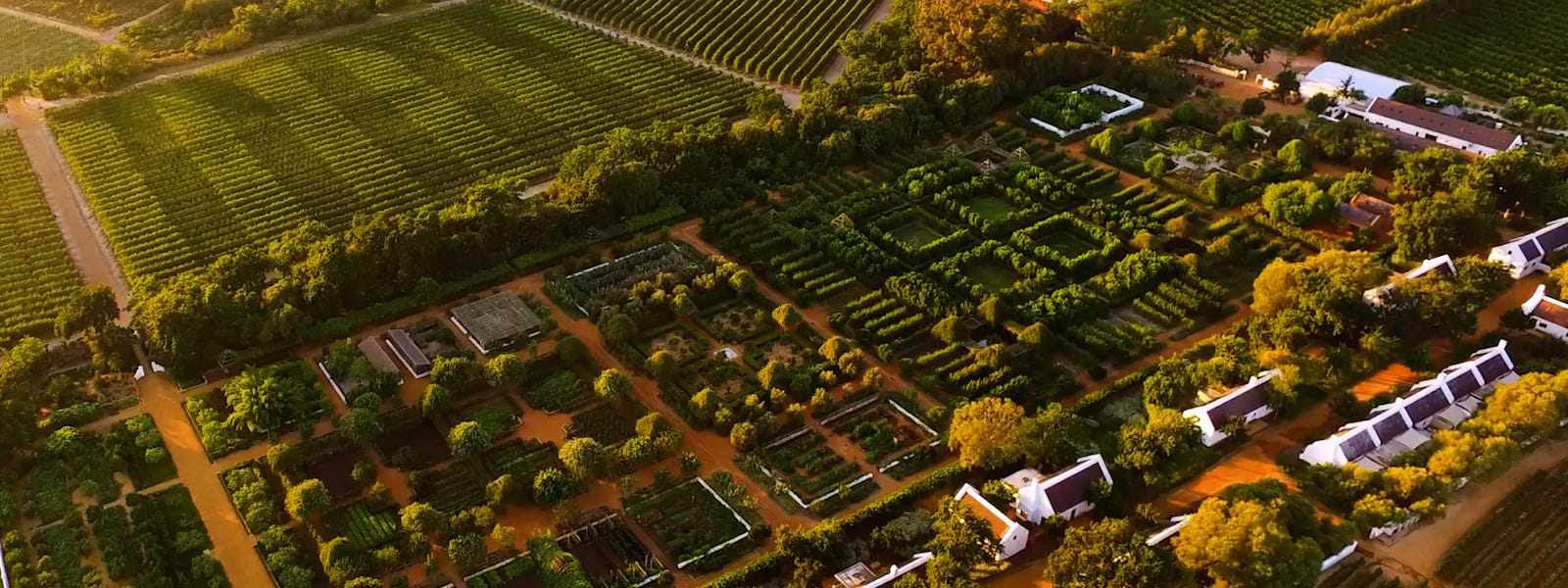
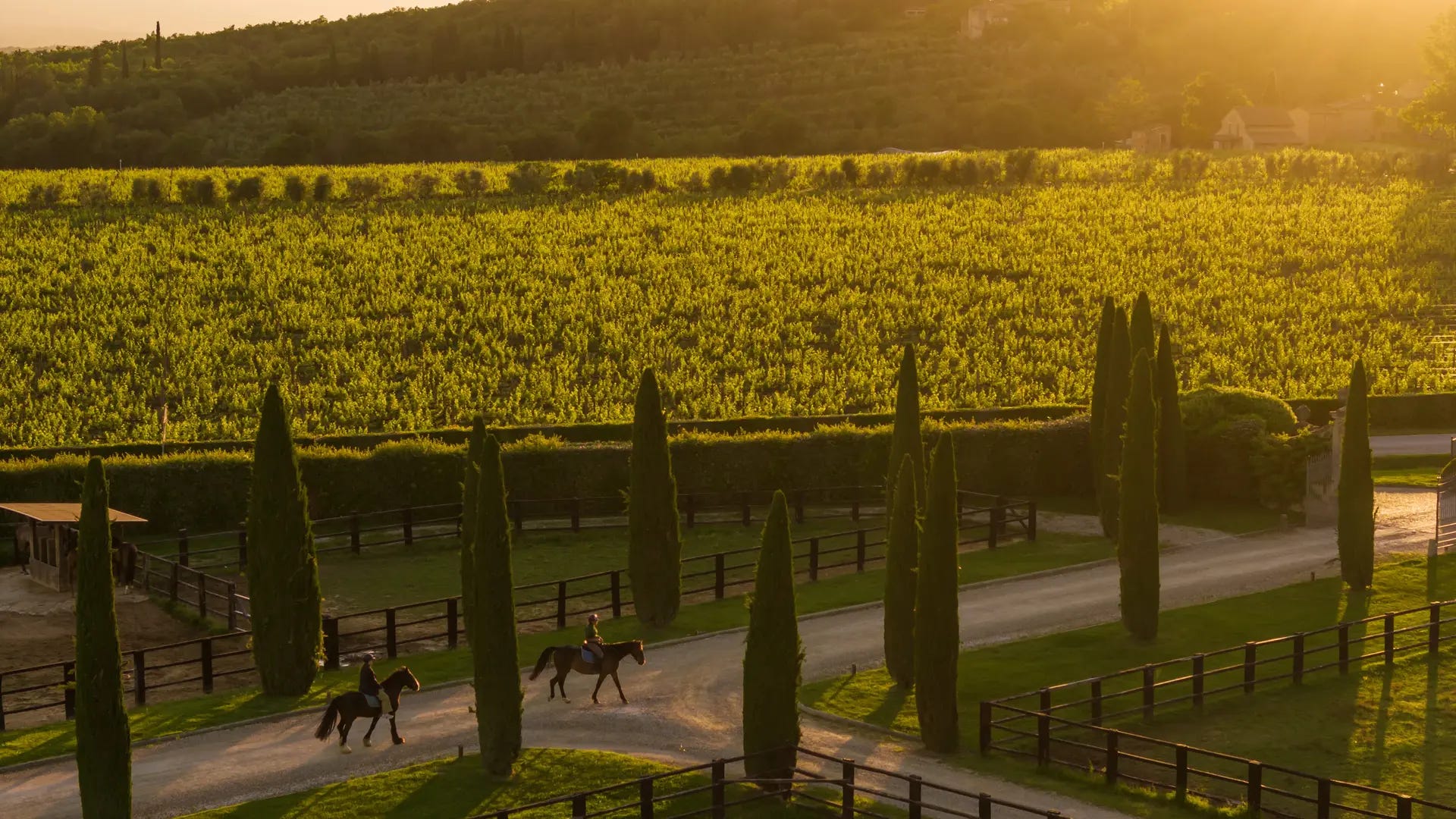
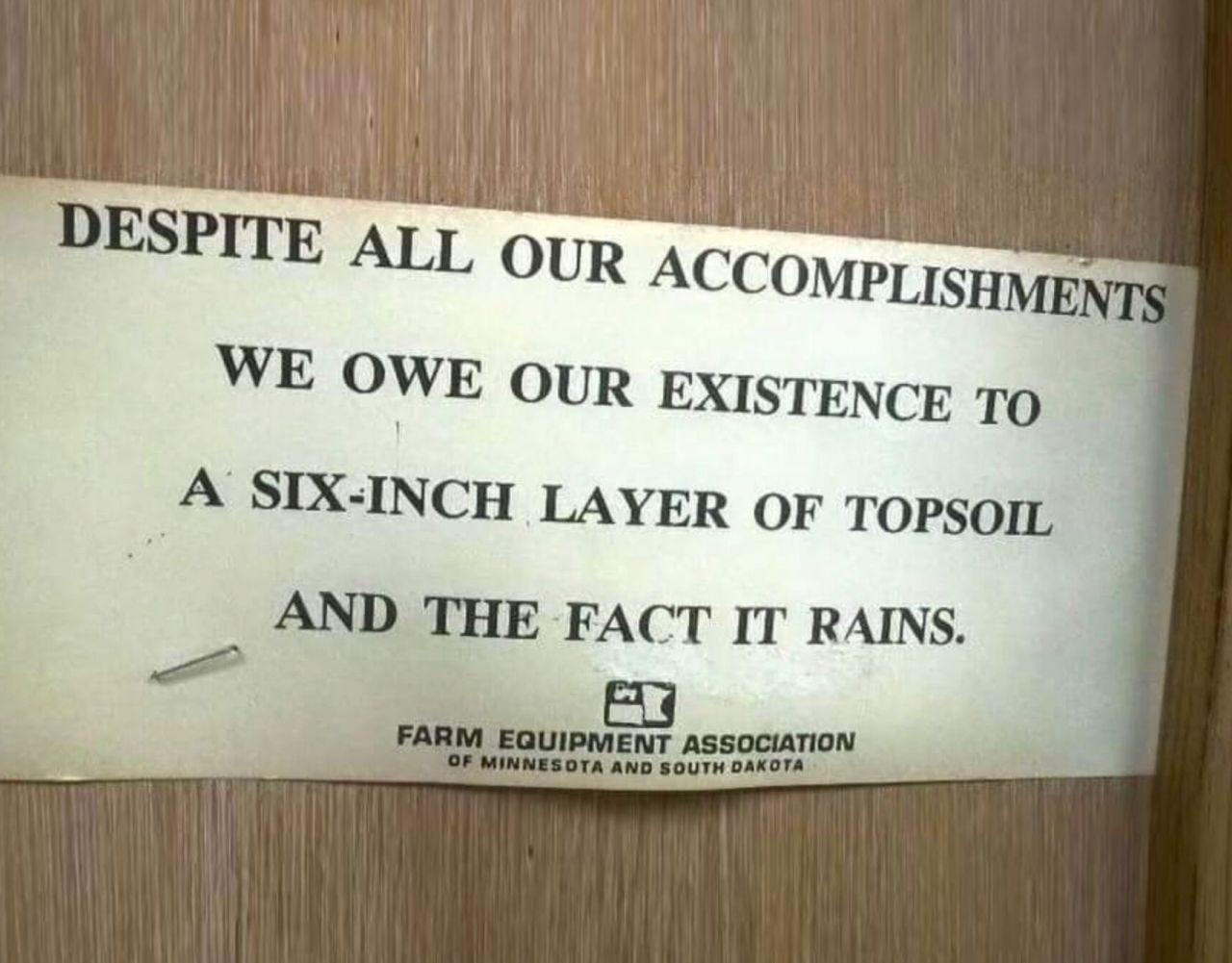
A quick education, from the soil up. Think of soil as either a living sponge or a dead brick. Regenerative farming builds the sponge; monoculture farming bakes the brick.
The living workers (microorganisms). A regenerative farm keeps living roots in the ground year-round and covers the soil with plants and mulch. Those roots leak sugars that feed bacteria and fungi, and the fungi / mycelium spread like an underground web connecting plant to plant. More food and more shelter means a booming population of tiny life — billions per handful. A monoculture farm grows one crop, tills the ground (which shreds that fungal web), and sprays chemicals that kill the workers. Think: Less food, less cover, fewer survivors. So, the same dirt goes from a crowded city of microbes to a near-empty one. Imagine the difference between a ROC (Regenerative Organic) Farm produce with higher life-force energy or phytonutrient dense in your olive, tomato, or lettuce. It is simple to understand, when is last time you tasted the full-flavor of a tomato, carrot, your lettuce the kind that exited your mouth and caused your eyes to light-up?
Holding water. All that root, fungus, and decayed-plant matter turns into a spongy material called organic matter. Sponge holds water — rain soaks in and stays, so the farm stays moist through dry spells. Bare, tilled monoculture soil is compacted and crusty, so rain runs off the top instead of sinking into the ground and the aquifer below. The REGEN farm drinks the rain; the MONO drains it away. Further issues occur when there is drought, the risk is significantly higher for mono-culture farms because there already is limited topsoil and then when rains come, the only remaining soil with any nutrient-rich value may be washed away which translates into potential loss of crops (loss of incomes to farmers), land (the topsoil), and reduce the food producible.
Storing carbon. Plants pull carbon out of the air and push a lot of it down into the soil through their roots to feed those microbes. In regenerative soil, the fungi and organic matter lock that carbon underground, where it stays for years. Tilling flips the soil over and exposes it to air, which releases the stored carbon back to the sky. So regenerative land acts like a bank vault for carbon, while plowed monoculture keeps leaking it.
The simple version: living roots + cover + no plowing = more tiny life → more sponge → more water and carbon held in the ground. It all comes from one idea — keep the soil alive and covered, and the intelligence of mother nature does the rest. Regenerative farms actually grow and are higher in elevation due to soil health. You are on higher ground if you placed a mono-culture farm next to a regenerative farm.
Syntropics (10) (syntropic farming) is a way of growing food that copies how a natural forest builds itself — planting many species together so the whole system gets richer, denser, and more alive over time instead of wearing out. The name is the key: entropy means things running down toward disorder; syntropy is the opposite — things building up toward more life and order. A syntropic plot packs plants of different heights and lifespans together (ground cover : shrubs, fruit trees : tall canopy) so they cooperate like layers of a forest. Fast crops feed you early while slow trees mature; heavy pruning drops leaves and branches that feed the soil. Each year the land grows more fertile on its own, with little outside input.
The simple version: farm like a forest grows — many plants in layers, working together, so the soil and the harvest keep getting better every season.
The Carbon Ledger: From Depleted Soil to Verified Asset. Let me start where most conversations skip — the baseline. Conventional tilled, continuous-monoculture cropland is not carbon-neutral; it is usually carbon-negative. When we break the ground season after season and grow a single crop on it, the soil steadily gives up its organic carbon rather than holding it. The point stands: the land most of our food comes from is quietly leaking carbon into the sky. (11)
Now bring that same ground into regenerative practice — living roots year-round, diverse plantings, minimal disturbance, animals in rotation — and the flow reverses. Because the land we started from was losing carbon, the honest way to describe the change is a swing across zero: moving that hectare from extractive monoculture to regenerative practice both stops the loss and begins a gain. Netted out, that improvement lands on the order of 1.3 to 8 tonnes of CO2e per hectare per year — about half a tonne to just over three tonnes per acre. (12)
Regenerative practice flips the same land from a net carbon source to a net sink.
Verified soil/carbon data and evidence-based wellness programming aren’t just for the investment committee — the guest now demands them too. This discipline earns backing from capital and the customer.
Within the regenerative range itself, the best systems store something like 10 to 18x times the low end.
Here is the distinction that keeps the whole Carbon Claims honest: gross agronomic rates — what the biology actually does in the ground and the branches. What a project is allowed to credit and monetize is a smaller, net number, and that is where the carbon standards come in. Two of them govern the work. Verra’s VM0042, Improved Agricultural Land Management (13), measures the carbon we rebuild in the soil itself — the topsoil organic carbon just described. Its companion, VM0047, Afforestation, Reforestation and Revegetation (14), measures the carbon held in living biomass: the trees, the syntropic canopy, the silvopasture and food-forest layers we establish above that soil. One methodology looks down into the ground; the other looks up into the branches. Together they let a single regenerative property credit both the trees above and the soil below.
On a property the size of a 234-acre farm (Apricot Lane Farms), that is on the order of fifty-five to two hundred forty-five verified credits a year from the trees alone, before the soil carbon under VM0042 is counted on its own track.
Even at premium prices, credit revenue lands in the low tens of dollars per acre — or $1,000 or $15,000 a year for a 250 Acre farm. Meaningful to the environment, yet supplementary income at best, not a core return, at this scale. (15)
The carbon ledger’s real job is to stabilize and de-risk the total asset — proof of quality a lender can underwrite and peace of mind for the equity investors that the ESG work is already done — while the farming and wellness-hospitality income do the heavy lifting and act as a demonstration of what’s possible (“do better”). Oh, and if we don’t start taking this nature-based “capital” into consideration as the life-giving basis for our existence, well, insert your own thoughts [here].
Monoculture’s loss is reversed into regenerative gain, gross reduced to net, verified independently and adjusted for permanence. Conventional monoculture loses carbon; regenerative practice stores it. The value isn’t just the carbon gained — it’s the loss stopped and the gain started, then discounted down to only what can be independently verified and sold. To think that one day a mono-culture farmer may be at risk due to negative-net carbon is wild isn’t it?
So, a claim about nature stops being a story. The rigor is not a burden. It is what lets aligned and patient capital trust what the land is quietly doing beneath our feet.
Stepping into Natural Capital version 3.0
These nature assets are evaluated on behavior, execution, and measurable site-specific physical evidence. Regenerative outcomes and financial performance are tangible, with proper governance and evidence that holds up through ownership and at Exit. The byproduct is there is direct causality between capital deployment, ecosystem outcomes, and strengthening local communities economically!
“This link between biodiversity and asset quality is currently more investable than reliance on an emerging credit market.” — Van Lanschot Kempen, Pricing Nature (Market Musings 05/26 (16)
ONE THESIS THAT HOLDS IT ALL TOGETHER
Regeneration is not a moral overlay on a real-estate deal — it is asset quality. Healthier soil, water, and biodiversity show up in the numbers as more stable yields, lower input costs, and greater asset durability. Robust measurement is what converts that from a story into something a capital partner can underwrite. And carbon or biodiversity credits sit alongside the core economics as adjacent revenue — never as the sole return engine. - Kempen (17)
Aptly assembled, Farm + Wellness Hospitality Developments provide more rigorous financial performance, once fully stabilized in year ~5+, following more closely the J-curve of CRE development.
And as I began with, the industry has progressed from pilot class to a prospective portfolio investment.
FROM NATURE-BASED INVESTMENT TO WELL-BEING TO WORMS... Why regen farming + wellness Real Estate is a viable solution
Demand meets supply. WELLSurvey proves the demand (large, science-led, brand-starved, WELLZoomer-driven); the WEF × McKinsey nature-finance report (18) proves the capital is ready and hunting for developed product.
This pairing is the de-risked, “3D,” outcome-based project the market wants — and the authentic, evidence-based, continuity-driven experience the consumer now demands.
Measurement is the single thread through both. Verifying nature results data makes the asset investable and the experience trustworthy. Same rigor, two payoffs.
Differentiation as risk reduction. An authentic regenerative brand isn’t just marketing — it’s how premium commands demand. The founder of AMAN, Adrian Zecha understood this in the selection of each exemplary location and understood that his repeat most loyal guests were looking for an energetic essence, that which only mother nature paired with a great nature-centric design yields. (19)
Verifiable integrity is what earns trust, through a feeling. Travelers are seeking what I call ancestral luxury, the smell of pine, olive, vines, the essence. Consuming food grown the same day it was picked, place as the experience. And when done responsibly right, it’s funding the restoration and conservation; authentic reciprocity.
So the ledger, the standards, and the premiums all resolve into something you can taste like a tomato picked that morning that makes your eyes light up. That is 1+1=4 in a single bite: farm, well-being, and the quiet fourth return that earned trust unlocks. The very feeling the data measures in how hopeful, joyful, and energized we feel is the feeling a regenerating place radiates. Like healthy soil, my own work began beneath the surface; regenerate the person and you regenerate the land, the food, and guests in turn. That is how a claim about nature stops being a story and becomes Natural Capital richer than intent — measured, trusted, and creates compounding in perpetuity, for people not yet born.
#WellnessRealEstate #RegenerativeDevelopment #Regenerativefarming #WellnessHospitality #ARCHĒ
Please Subscribe and please share with one or two others who might learn from this article and teach your kids some of this. Whether you are an investment banker, landowner, family office, farmer, or industry service provider, we are looking to connect and make some magic. Sharing the article on platform is the best way to activate the algorithm to spread awareness!
Stay-tuned for full series:
Part 1 — This article
Part 2 — Engineering Patience: The No-Exit Structure
Part 3 — Layering the Stack: Where the Money Actually Comes From
Part 4 — Patient Is Not Passive: Measurement Is the Currency
Part 5 — The Honest Case: What’s Proven, and What’s the Frontier
ABOUT THE AUTHOR & ARCHĒ Advisers
I’ve had a career in commercial real estate project development that has grown to become a grounded purpose of regeneration. A career foundation built on jobsites is now wisdom carried into the boardroom and onto the land, where I serve as a commercial real estate developer and advisor. ARCHĒ, its keystone associates have planned and executed over 62+ CRE projects totaling $4.0 billion, 1,000+ Acres, have a combined 150 years of institutional experience , and $400M in our pipeline. We are working on tallying the “empirical” nature and social impact numbers, stay tuned ;) Like healthy soil, our work also goes beneath the surface and into community building.
My renewed focus has grown into regeneration the way roots grow toward water. After completing a $50M wellness resort & spa project in Carefree, Arizona in 2018, I have transformed from a limited positive impact of sustainable (do less bad) to regenerative (do better). In 2020, I traveled to Egypt to learn BioGeometry®, The Physics of Quality (TM). Think of Biogeometry as ancient wisdom applied to harmonize the built environment and much more. In 2024, a further shift occurred in my awareness. Now, I am focusing on nature-based living-systems projects — where nature first approach is coupled with creating better outcomes. My differentiator is a hard + soft set of skills and through teaming with nature and others in order to create dynamic projects starting with what they place should be, not what we think its “highest and best use” determined solely by a market demand study. At 50, I’ve unified my work and life into one.
REFERENCES & NOTES
1. Blue Economy 3.0 (The book) The marriage of science, innovation and entrepreneurship creates a new business model that transforms society.
2. “Pulp-to-Protein” (from Blue Economy 3.0) — illustrative term for converting farm and food-processing by-products (fruit pulp, spent grain, trimmings) into animal feed, protein, or natural fertilizer; a circular / Blue-Economy waste-to-revenue example.
3. Global Wellness Institute (GWI) — wellness real estate (~$548B, 2024 → ~$1.1T by 2029) and wellness-tourism figures. globalwellnessinstitute.org
4. Urban Land Institute — “Agrihoods: Cultivating Best Practices” (2018). ULI Agrihoods report
5. Kelly, K. & Yesawich, P. C. — WELLSurvey™ 2.0 (April 2026), Civano Advisors, LLC & Yesawich Holding; a 2,648-adult transatlantic probability survey (US/UK/Germany).
6. Apricot Lane Farms — Moorpark, California; the farm featured in The Biggest Little Farm. apricotlanefarms.com
7. Babylonstoren — Simondium, Western Cape, South Africa; working farm, hotel, and retail estate. babylonstoren.com
8. Il Borro — Valdarno, Tuscany, Italy; organic estate and Relais & Châteaux owned by the Ferragamo family. ilborro.it
9. The Biggest Little Farm (2019) — documentary directed by John Chester, chronicling Apricot Lane Farms. apricotlanefarms.com/biggest-little-farm
Other documentaries: Groundswell (Amazon Prime), Common Ground (Amazon Prime), Kiss The Ground (Amazon Prime).
10. Syntropic farming — successional, multi-strata agroforestry that mimics forest development; developed by Ernst Götsch. agendagotsch.com
11. Monoculture carbon baseline (suggested) — conventional tilled monoculture typically loses ~0.3–1.2 t C/ha/yr (≈1.1–4.4 tCO₂e). See tillage / soil-organic-carbon studies, e.g., Environ. Res. Lett. (IOP, 2020). IOPscience (2020)
12. Regenerative sequestration benchmark (suggested) — ~0.2–3.6 tCO₂e/ha/yr in topsoil; net swing vs. monoculture ~1.3–8 tCO₂e/ha/yr. Synthesis incl. Frontiers in Sustainable Food Systems (2023); rates vary and remain contested. Frontiers Sustain. Food Syst. (2023)
13. Verra VM0042 — VCS Methodology “Improved Agricultural Land Management” (soil organic carbon), v2.2. verra.org — VM0042
14. Verra VM0047 — VCS Methodology “Afforestation, Reforestation and Revegetation” (biomass carbon), v1.1. verra.org — VM0047
15. Carbon-credit pricing (suggested) — 2026 voluntary market: ARR/reforestation ~$7–24/tonne; premium verified regenerative-soil removals ~$50–65/tonne. Sylvera — carbon prices
16. Van Lanschot Kempen — “Pricing Nature: carbon and biodiversity credits explained,” Market Musings 05/26 (Arif Saad). vanlanschotkempen.com
17. Van Lanschot Kempen — “Sustainable Farming” / Natural Capital 3.0 (2024 FCLTGlobal Blue Book); source of the asset-quality framing. fcltglobal.org
18. World Economic Forum with McKinsey & Company — “Finance Solutions for Nature: Pathways to Returns and Outcomes,” Insight Report, September 2025. weforum.org
19. Adrian Zecha (suggested) — founder of Aman Resorts; cited for location selection and “sense of place.” aman.com
GLOSSARY of Terms
Plain-language definitions of terms used above (alphabetical).
3D lens — evaluating an investment across three dimensions — risk, return, and impact (WEF × McKinsey framing).
ADR — Average Daily Rate — average revenue per occupied room per night.
Agrihood — a residential development built around a working farm as its central amenity.
Biodynamic — a certified organic-plus farming system (Demeter) that treats the farm as one living organism.
Buffer pool — carbon credits withheld (often 15–20%) as insurance against future reversal / non-permanence.
CAGR — Compound Annual Growth Rate.
CRE — Commercial Real Estate.
ESG — Environmental, Social, and Governance criteria.
J-curve — a development’s return profile that dips early before rising as the asset stabilizes
MRV — Measurement, Reporting & Verification — what turns an environmental outcome into a creditable claim.
Mycelium — the underground, thread-like body of fungi that links plant roots and moves water and nutrients.
Natural capital — the stock of natural assets — soil, water, other biodiversity that produce valuable ecosystem services.
Net sink / net source — land that stores more carbon than it releases (sink) vs. the reverse (source).
Permanence — how durably stored carbon stays out of the atmosphere over time.
Performance benchmark — the business-as-usual baseline (from control plots) against which creditable removals are measured.
PES — Payments for Ecosystem Services — paying landholders to maintain services like clean water or carbon storage.
Phytonutrient — a plant compound linked to flavor, color, and health benefits.
ROC — Regenerative Organic Certified — soil health, animal welfare, and social fairness layered onto organic.
Silvopasture — integrating trees, forage, and grazing animals on the same land.
tCO₂e — tonnes of carbon-dioxide equivalent — the standard greenhouse-gas unit.
Trophic cascade — the ripple of ecological effects through a food web when nature’s balance is restored.
WELLZoomers — the 25–44 wellbeing-driven consumer cohort identified in WELLSurvey 2.0.